
Largest Cities in North America by Population
By CitiView Team
27 March 2026
Last Updated:
Toronto, Canada
North America is home to over 600 million people, with a staggering 82% of its population residing in urban areas. In 2026, the continent’s urban landscape is a study in contrasts: the historic, transit-oriented "old world" cities of the East Coast vs. the sprawling, car-centric "new world" metropolises of the South and West.
Unlike Europe’s relatively stable population, North America remains a dynamic frontier of movement. The 2020s have seen a significant "Internal Migration" trend, where millions have shifted from the traditional "Rust Belt" (like Chicago and Philadelphia) toward the "Sunbelt" (Houston, Dallas, and Atlanta). This has created massive, multi-city "Mega-Regions" where distinct municipal borders are becoming blurred by continuous suburban development.
Furthermore, the "Gateway Effect" remains a defining characteristic. Cities like New York, Toronto, and Miami function as international portals, where high immigration rates counteract natural population plateaus. This introduction sets the stage for our Top 10 ranking, exploring not just where people live, but the economic and geographic forces—from the Great Lakes to the Mexican Highlands—that pull them there.
Top five most populated cities in Europe
Mexico City, Mexico
New York City, United States
Los Angeles, United States
Chicago, United States
Toronto, Canada
This study examines the ten most populous urban agglomerations in North America as of 2026, analyzing the demographic shift from traditional industrial centers to the "Sunbelt" and "High-Tech" hubs. Utilizing current population estimates, the research distinguishes between "City Proper" boundaries and functional metropolitan areas to provide a realistic view of urban influence. Key findings highlight the continued dominance of Mexico City and New York as global megacities, while identifying the rapid ascent of Toronto and the Dallas-Fort Worth "Metroplex" as primary drivers of continental growth. The analysis further explores how geographic constraints—such as Miami’s Everglades and Mexico City’s high-altitude basin—dictate the density and verticality of modern North American settlement patterns.
1. Mexico City, Mexico
Reclaiming its title as the continental leader, the Mexico City metropolitan area holds roughly 23.1 million people. Built on the ruins of the Aztec capital Tenochtitlan, the city sits in a high-altitude basin surrounded by volcanoes. It is a true "alpha" city, serving as the financial, political, and cultural sun around which the rest of the country orbits, containing nearly 20% of Mexico's total population.
2. New York City, United States
The New York metropolitan area follows closely with approximately 19.3 million residents. While the "City Proper" has seen slight fluctuations, the tri-state area remains the world’s premier financial hub. Its history is defined by its five-borough consolidation in 1898 and its role as the "Gateway to America" via Ellis Island, creating the most linguistically diverse urban landscape on Earth.
3. Los Angeles, United States
The Greater Los Angeles area is home to about 12.8 million people. Known for its horizontal sprawl, LA is a polycentric city where neighborhoods like Santa Monica, Hollywood, and Long Beach function as distinct mini-cities. Its growth was fueled by the 20th-century booms in oil, aerospace, and entertainment, turning a semi-arid coastal basin into a global media powerhouse.
4. Chicago, United States
The Chicago metropolitan area, or "Chicagoland," maintains a population of roughly 9.1 million. Located at a strategic continental portage point between the Great Lakes and the Mississippi River watershed, it became the rail and meatpacking capital of the world. Today, its economy is highly diversified across finance, manufacturing, and logistics, anchored by its iconic lakefront skyline.
5. Toronto, Canada
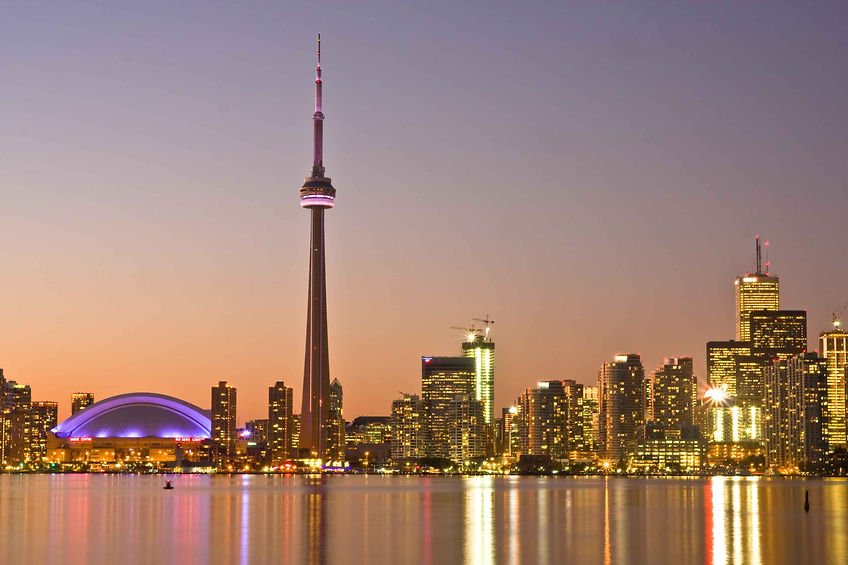
Canada’s largest metropolis has surged to approximately 7.6 million residents in its Greater Area. As one of the fastest-growing cities in North America, Toronto's rise is driven by aggressive immigration and its status as the nation's banking center. Its history is rooted in its evolution from "York" into a vertical city, now rivaling Chicago for the title of the continent's most significant Great Lakes hub.
6. Houston, United States
The Houston metropolitan area has expanded to 7.0 million people. Often called "Space City," its growth is a 21st-century phenomenon driven by the energy sector and the lack of traditional zoning laws, allowing for massive geographical expansion. It is currently one of the most ethnically diverse cities in the U.S., with a booming medical and aeronautics industry.
7. Dallas-Fort Worth, United States
The DFW "Metroplex" holds roughly 6.8 million residents. Unlike monocentric cities, this is a dual-core urban area where Dallas and Fort Worth have grown toward each other to create a continuous urban carpet. Its economy is a titan of telecommunications, transportation, and defense, benefiting from a central location that makes it a primary logistics node for North America.
8. Miami, United States
Greater Miami has reached a population of about 6.4 million. Confined between the Atlantic Ocean and the Everglades, Miami’s growth is dense and vertical. It serves as the "Capital of Latin America" due to its deep cultural and financial ties to the Caribbean and South America, with an economy heavily influenced by international trade, tourism, and real estate.
9. Atlanta, United States
The Atlanta metropolitan area continues its rapid climb, now housing 6.3 million people. Historically a railroad terminus, it is now the "New South's" primary economic engine. Despite being 9th in population, its airport remains the busiest in the world, and the city has become a major hub for film production, technology, and Fortune 500 headquarters.
10. Philadelphia, United States
The "Cradle of Liberty" rounds out the top ten with 5.9 million people in its metropolitan region. As one of the oldest cities in the U.S., its urban fabric is defined by its historic brick architecture and a dense core designed by William Penn. While it faces competition from the Sunbelt cities, it remains a critical healthcare and educational hub on the densely populated Northeast Corridor.